Lithuanian Language in the Digital Age
Lithuanian is one of Europe’s oldest living languages, full of history and unique features that make it truly special. Today, as technology touches every part of our lives, keeping Lithuanian alive online is more important than ever. From apps to speech recognition, new digital tools are helping the language thrive in the modern world.
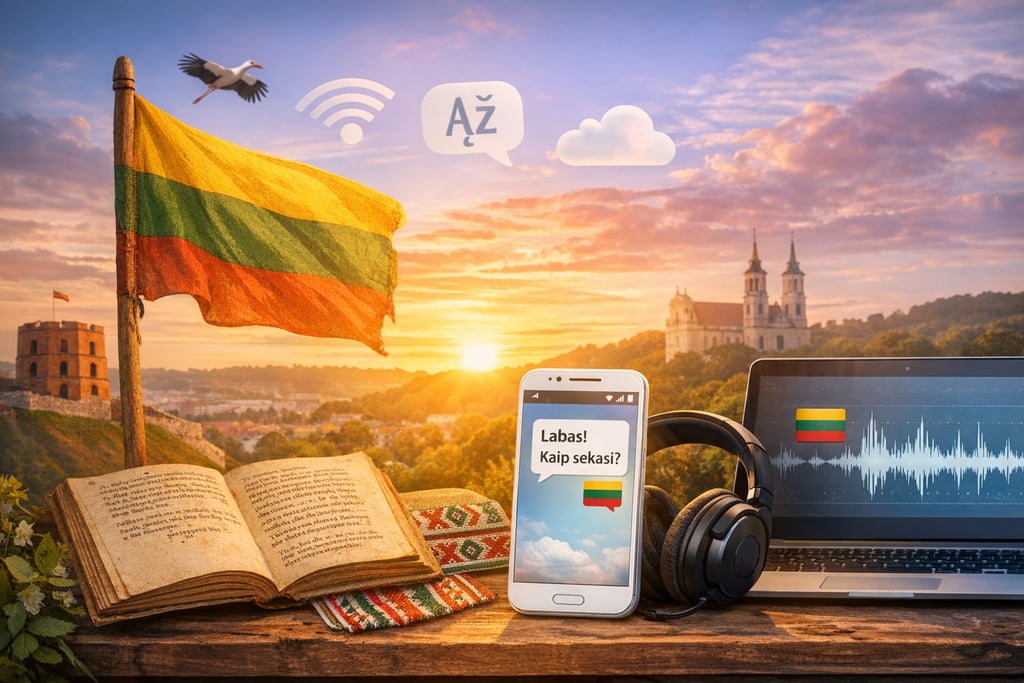
Technology is everywhere these days. From checking your bank account online to chatting with friends on your phone, we rely on it for almost everything. But have you ever wondered how languages keep up with all these digital changes? For smaller languages like Lithuanian, staying relevant online is a big challenge—but also a huge opportunity.
Lithuanian is one of the oldest living languages in Europe. It has kept many features from ancient languages, which makes it unique and fascinating. About 2.7 million people speak Lithuanian in Lithuania, and there are communities around the world—from the United States to Australia—keeping the language alive abroad.
To make sure Lithuanian thrives in today’s digital world, the Lithuanian government and language experts created a special plan called The Guidelines for the Development of the Lithuanian Language in the Digital Environment 2021–2027. The idea is to make Lithuanian fully usable online, in apps, websites, and even smart devices. This means creating more digital resources like text and speech databases, improving machine translation, developing speech recognition tools, and making these technologies easy for everyone to use, including people with disabilities.
Lithuania has already made impressive progress. Large collections of Lithuanian texts and spoken material have been put online for research and language technology. Digital dictionaries and term banks are freely available, helping people check spelling, understand new words, and even learn specialized vocabulary. There are tools that can read text out loud, understand spoken Lithuanian, and even translate it into other languages. Universities and tech companies are at the heart of this work, making sure Lithuanian stays strong and modern.
Why does this matter for ordinary people? Language technology is all around us, even if we don’t notice it. It helps us type correctly, speak to computers, translate documents, and learn more easily. It connects communities in Lithuania and abroad, making sure the language doesn’t get left behind as technology changes the world.
The future looks bright for Lithuanian online. With AI, smart speech tools, and better translation systems, it’s becoming easier than ever to use Lithuanian in the digital world. The goal is clear: whether you live in Vilnius, London, or New York, you should be able to fully use and enjoy Lithuanian online, just like any other major language.